These car tyres reduce pollution and improve EV range.
✍️ Niall Beamish

When we think of car pollution, we understandably tend to think of CO2 emissions and other pollution associated with combustion engines. However, tyres are also a significant source of pollution and emissions, one that is often overlooked.
End-of-life tyres make up 2% of total global waste. Often, these discarded tyres are disposed of by burning, releasing harmful toxins and pollutants into the earth’s atmosphere. However, tyres are problematic even before they are thrown away or burned.
When tyres wear against road surfaces, they release tiny particles. According to Imperial College London, tyre particles now account for 28% of the microplastics found in our oceans.
| “tyre particles now account for 28% of the microplastics found in our oceans”
As the electric vehicle (EV) market continues to grow, the challenge of tyre pollution has gained increased attention. EVs generally weigh more than their combustion engine counterparts due to their heavy batteries. As a result, tyres on EVs degrade much faster, contributing to even greater plastic particle emissions.
Another closely related challenge is EVs’ limited driving range, particularly in areas where charging infrastructure is sparse. This problem restricts EV’s wider adoption, especially in economically developing regions, where the energy transition lags behind.
According to the International Energy Agency, EVs comprised over 18% of car sales in 2023—a notable increase from previous years—but expanding this market further requires substantial improvements in tyre efficiency.

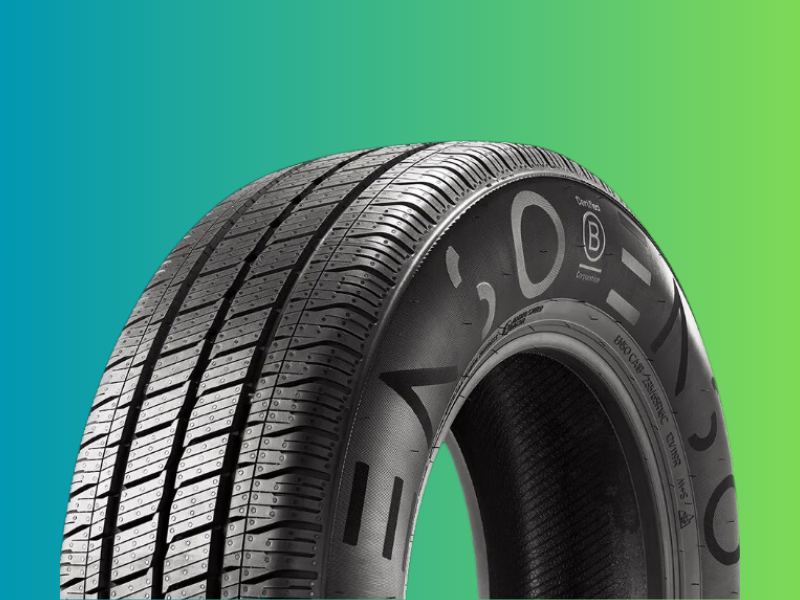
ENSO is rethinking the tyre from the ground up—designing it not just for performance, but for sustainability in every sense of the word. While most tyres are made with fossil-based materials and designed to be discarded, ENSO is developing tyres specifically engineered for electric vehicles (EVs) that deliver better range, emit fewer pollutants, and are built with circularity in mind.
At the core of ENSO’s innovation is the use of recycled and sustainable raw materials, including recycled carbon black, which significantly reduces the carbon footprint associated with traditional tyre production. Their materials are carefully selected and engineered to balance durability, efficiency, and environmental impact.
But ENSO doesn’t stop at materials. The company’s tyres are designed to reduce wear-related particulate emissions, which are a major but often overlooked source of urban air pollution—particularly harmful to both people and the environment. Unlike conventional tyres that degrade quickly under the weight and torque of EVs, ENSO tyres are tailored for electric vehicles, optimising energy efficiency and grip while also increasing vehicle range by up to 10%.
Equally important is ENSO’s commitment to circularity. Rather than treating tyres as disposable, ENSO is building a closed-loop system in which worn tyres are collected, broken down, and their valuable components reused in new production cycles. This approach not only minimises waste but also dramatically cuts the need for virgin raw materials.

ENSO is scaling its model in line with the energy transition. In June 2023, the company secured a letter of interest from the U.S. Export-Import Bank to develop a $500 million production plant in the United States, capable of manufacturing up to 20 million EV tyres annually. This facility promises to accelerate the availability of sustainable EV tyres, with an impact reaching beyond the UK market.
For innovators, ENSO’s model emphasises the importance of looking beyond vehicle emissions to the entire lifecycle of automotive products and advocating for sustainable practices across the entire supply chain.